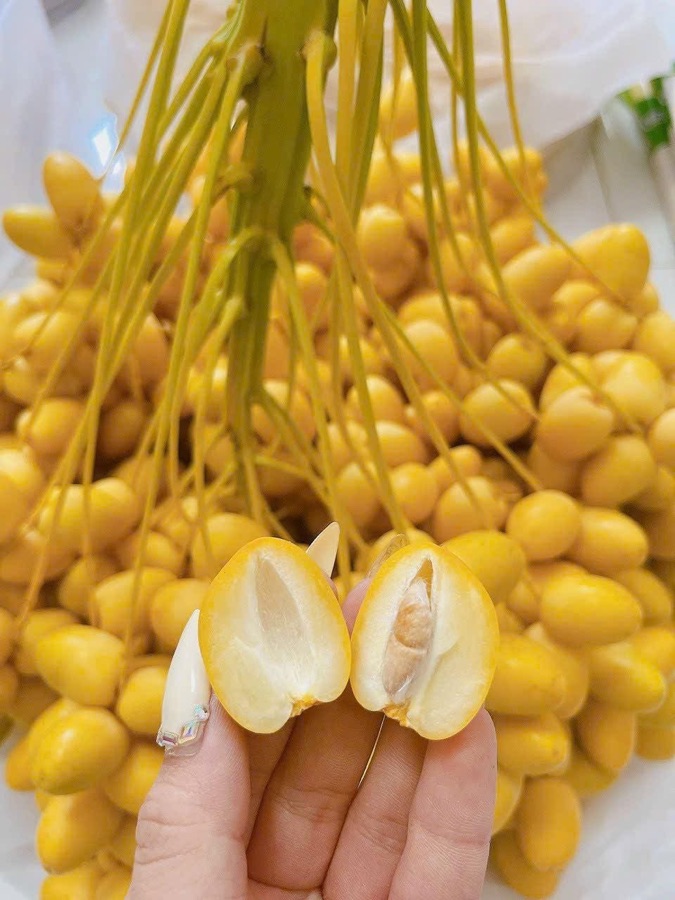
Barhee
Yellow fruit
70% of the palms
Go Dau, Tay Ninh · about 50 km from Ho Chi Minh City
Nearly 300 tissue-culture date palms, imported from the Middle East, went into the ground on 13 July 2026. The first harvest is expected in 2029. We write down every step here.
Story
On 13 July 2026, nearly 300 tissue-culture date palms were planted in Phuoc Thanh commune, Go Dau district, Tay Ninh province. The plants were imported from the Middle East.
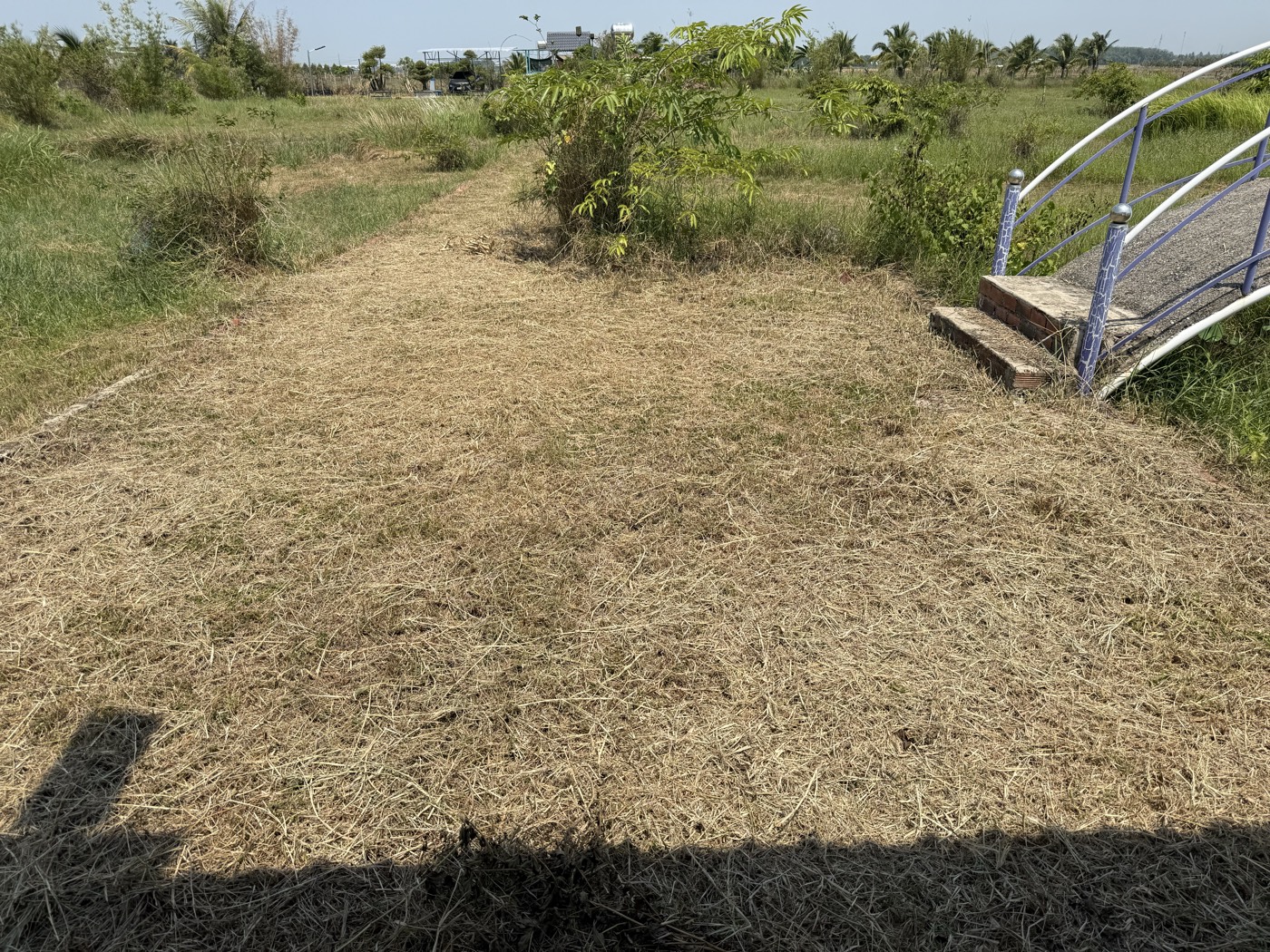
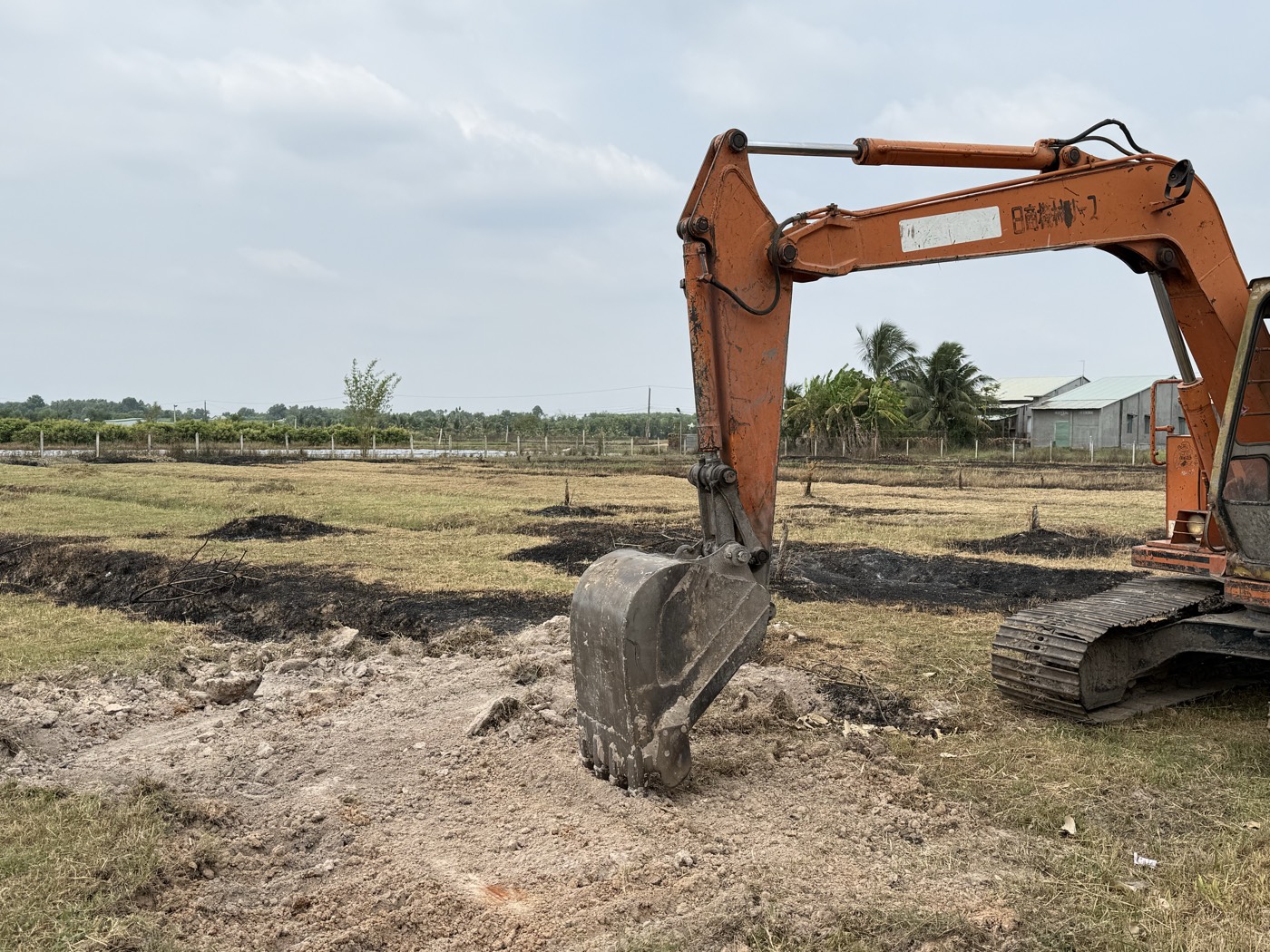
More than three months of preparation came first. From early April the field of dry grass was reworked: an excavator came in, the ground was levelled and every planting spot was marked.
The garden grows three varieties: Barhee (about 70% of the palms), Konaizi and Dahan (about 15% each).
Tissue-culture palms are propagated from plant tissue in a laboratory, not grown from seed. On the plan, the first dates come about three years later.
During those three years we will share how the palms grow, how the weather treats them, and what does not go to plan. We do not promise much, only to tell it as it is.
Varieties
The garden grows three date palm varieties. Shares are by number of palms planted.
Yellow fruit
70% of the palms
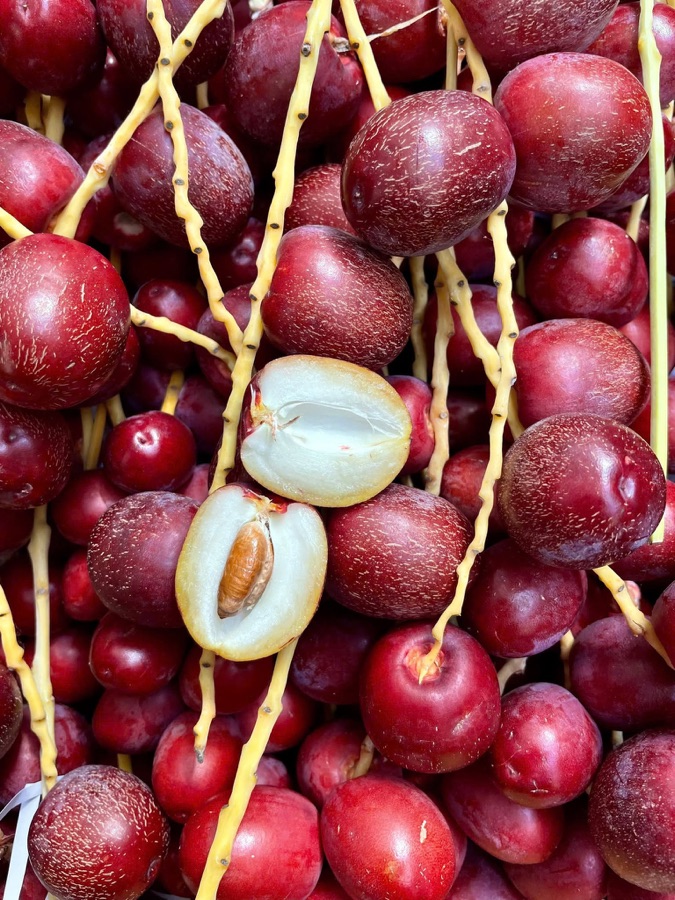
Red, round fruit
15% of the palms
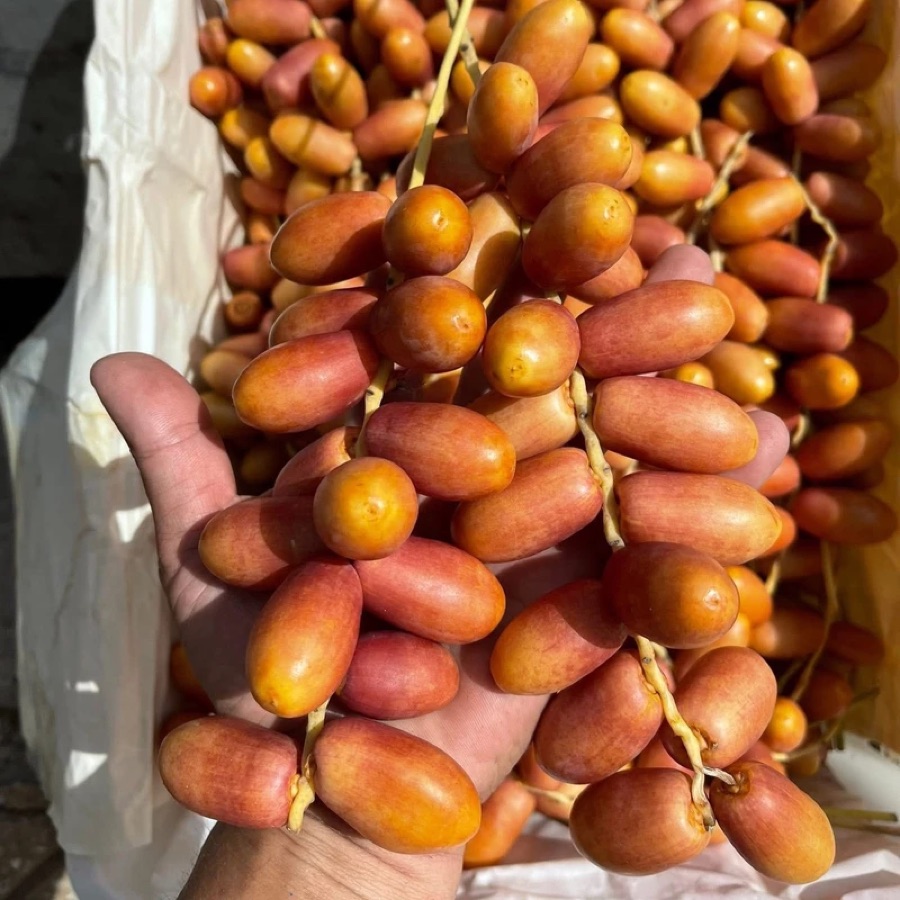
Yellow-orange, slightly long fruit
15% of the palms
Fruit photos are public images from the web, only to help you picture each variety. They are not fruit from this garden. The garden's own fruit is expected from 2029, and we will post real photos then.
Garden diary
Photos taken in the garden. A new entry is added every week, along with videos on Facebook and TikTok.
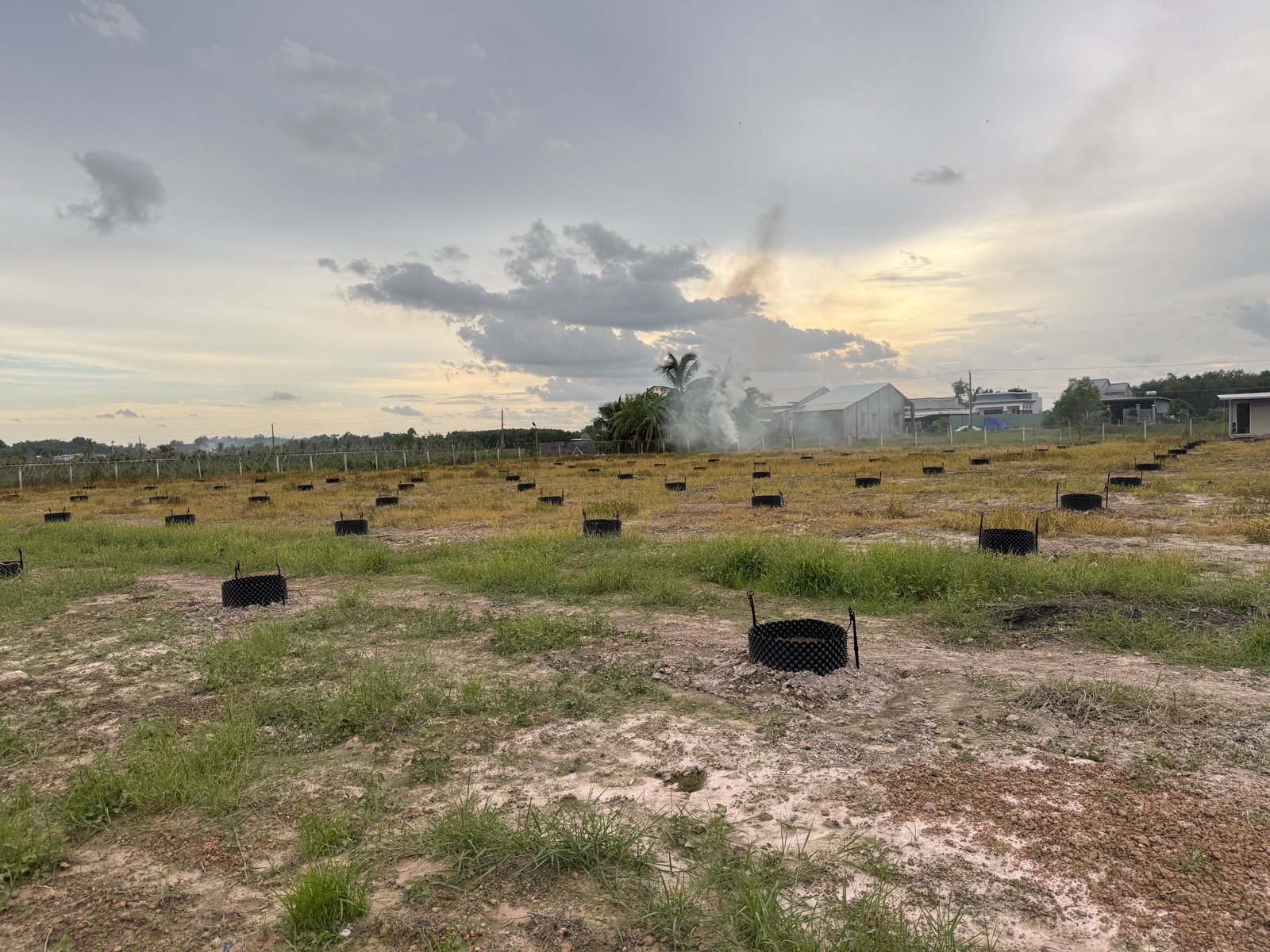
In early April the land was covered in dry grass. No holes, no plants. More than three months of preparation began here.
An excavator came in and started working the soil. The old ground was redone from scratch.
A little later the ground was flat and pale. Someone stands in the middle, looking at the land that is about to become a garden.
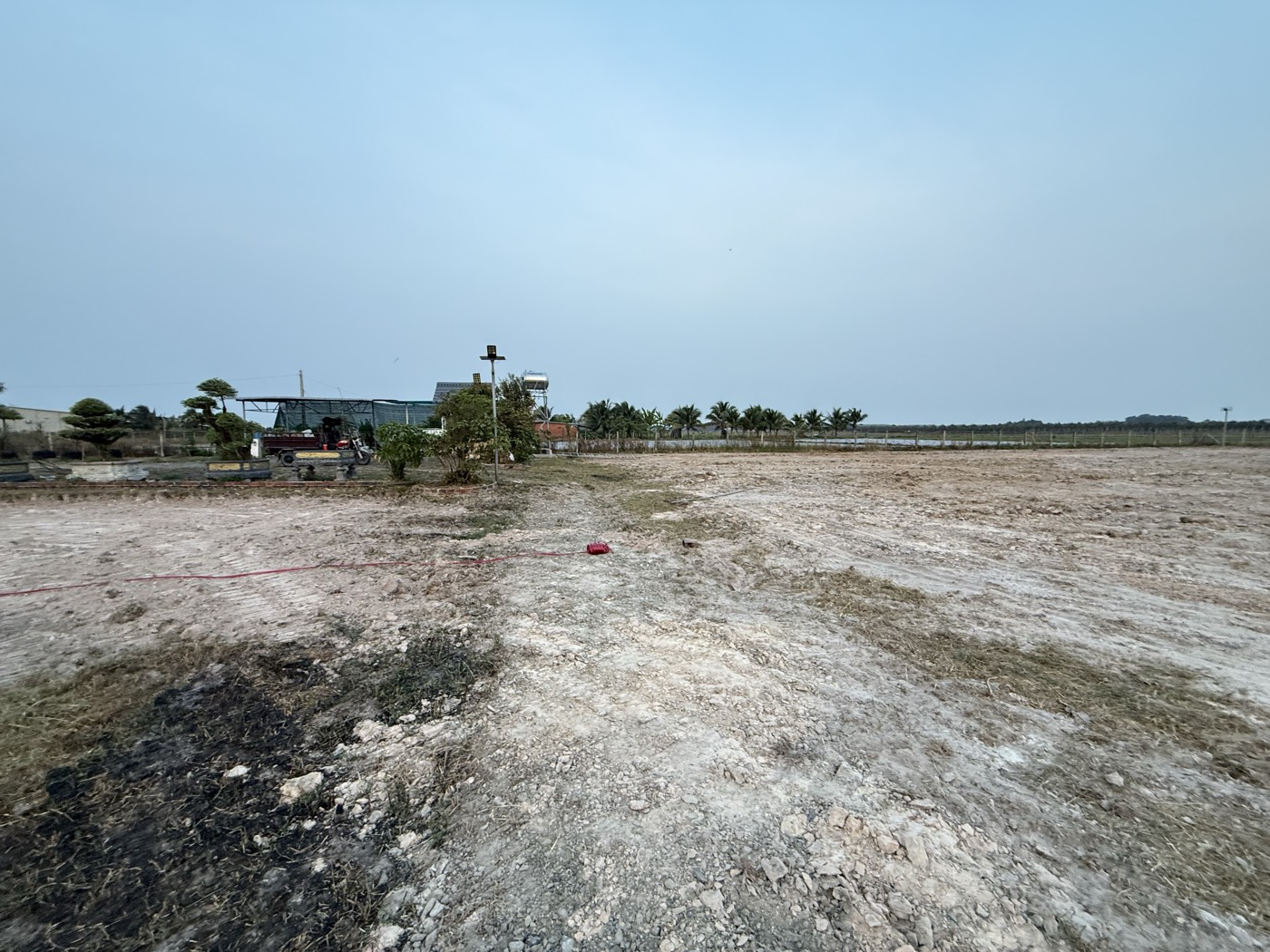
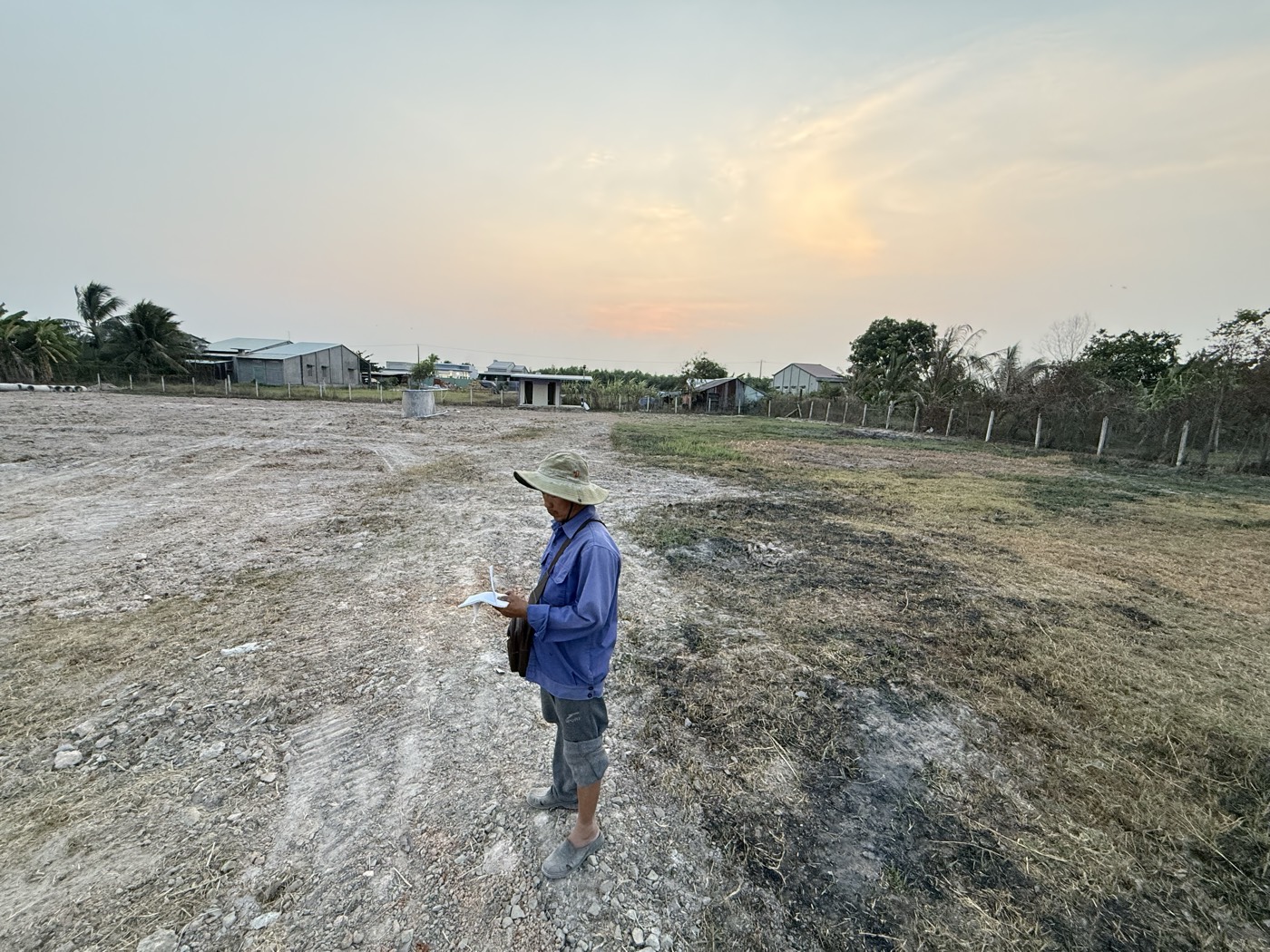
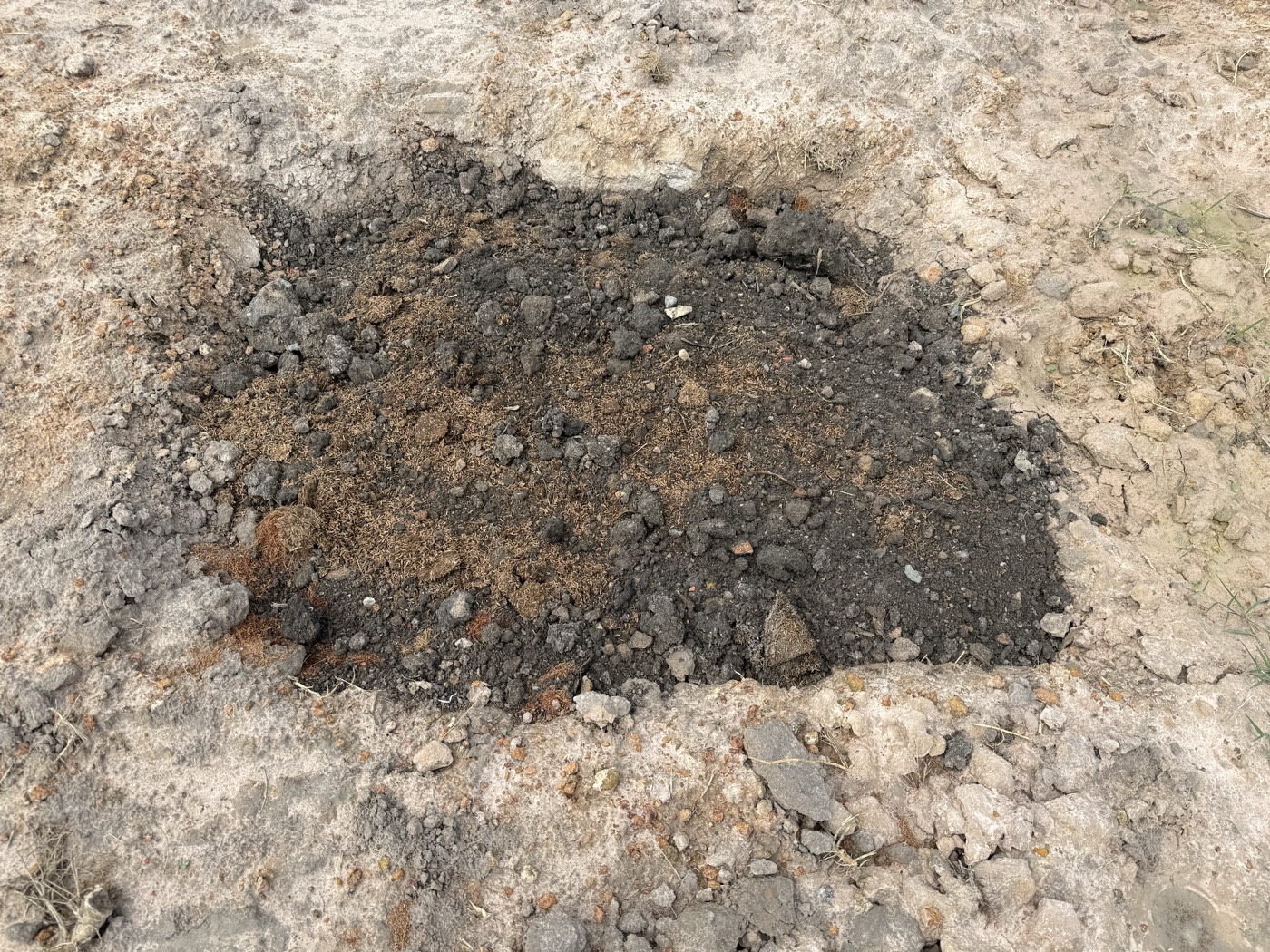
By late May each planting spot was marked and a layer of dark soil was laid on the pale ground. Every palm would have its own place.
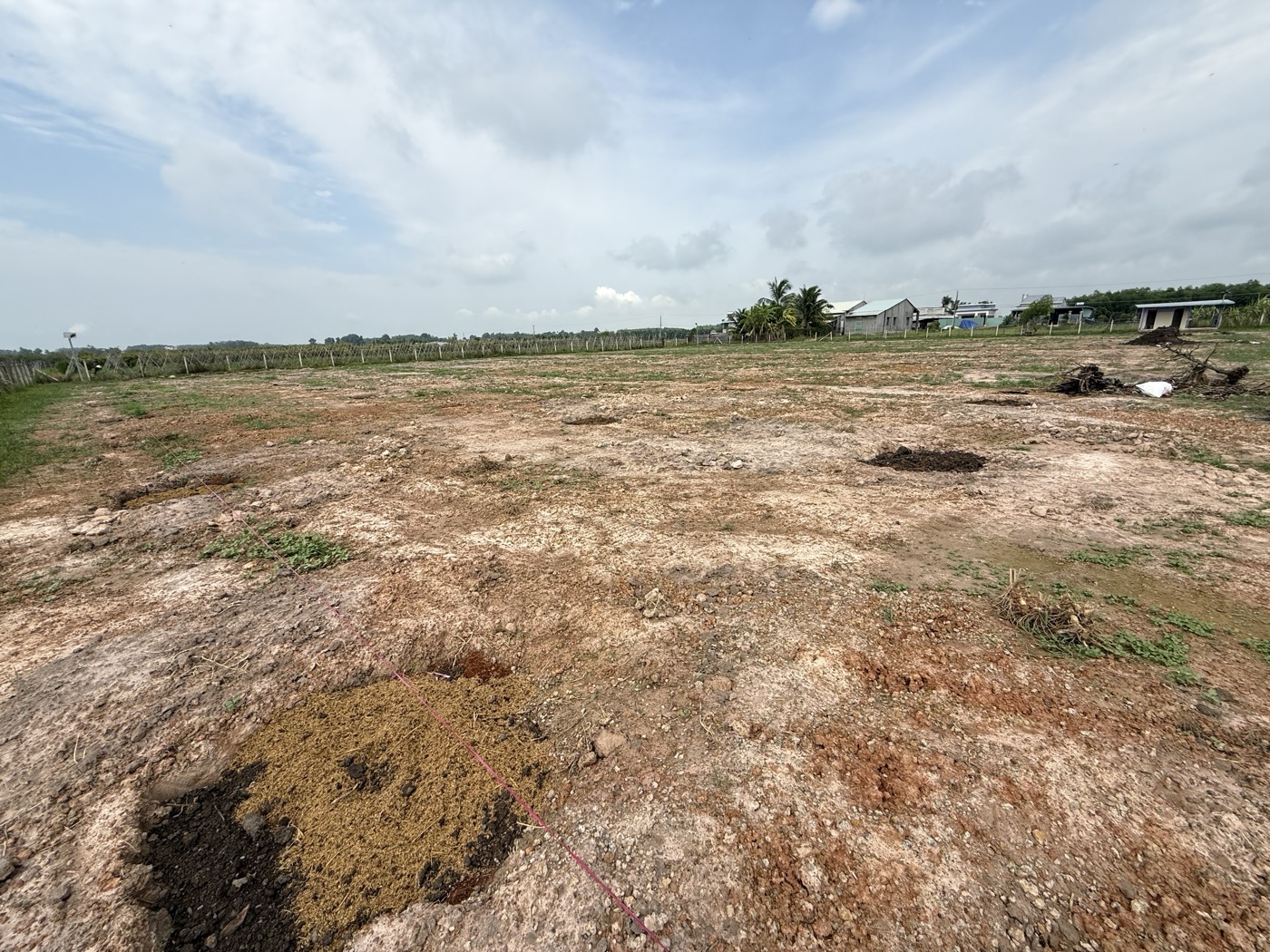
By early June the black rings were already in place at every planting spot, with drip lines running along the rows. The garden was ready for the palms.
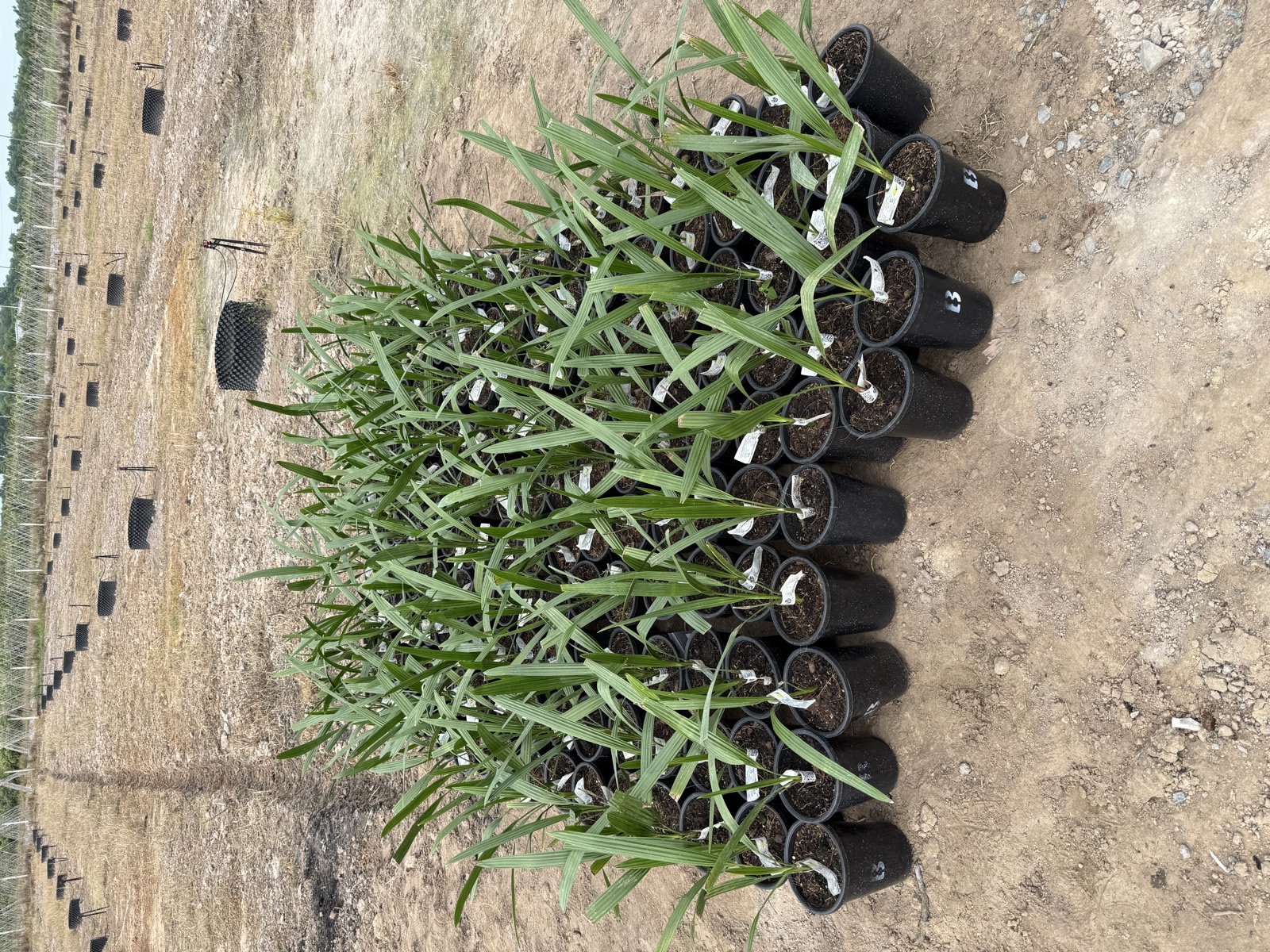
The plants were picked at a nursery, each in its own pot with a label. Sometimes a pot had to be lifted to look at the roots before accepting it.
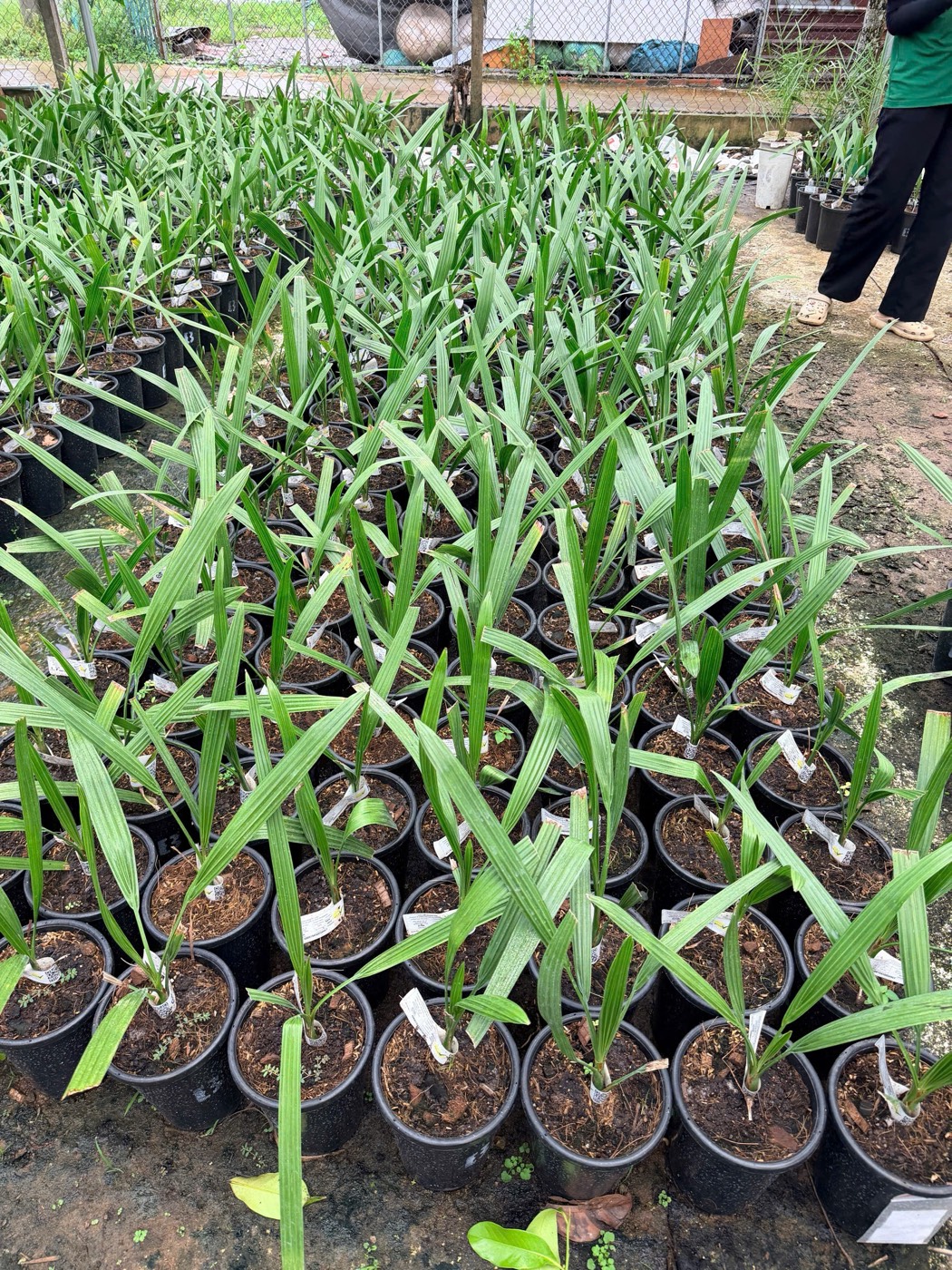
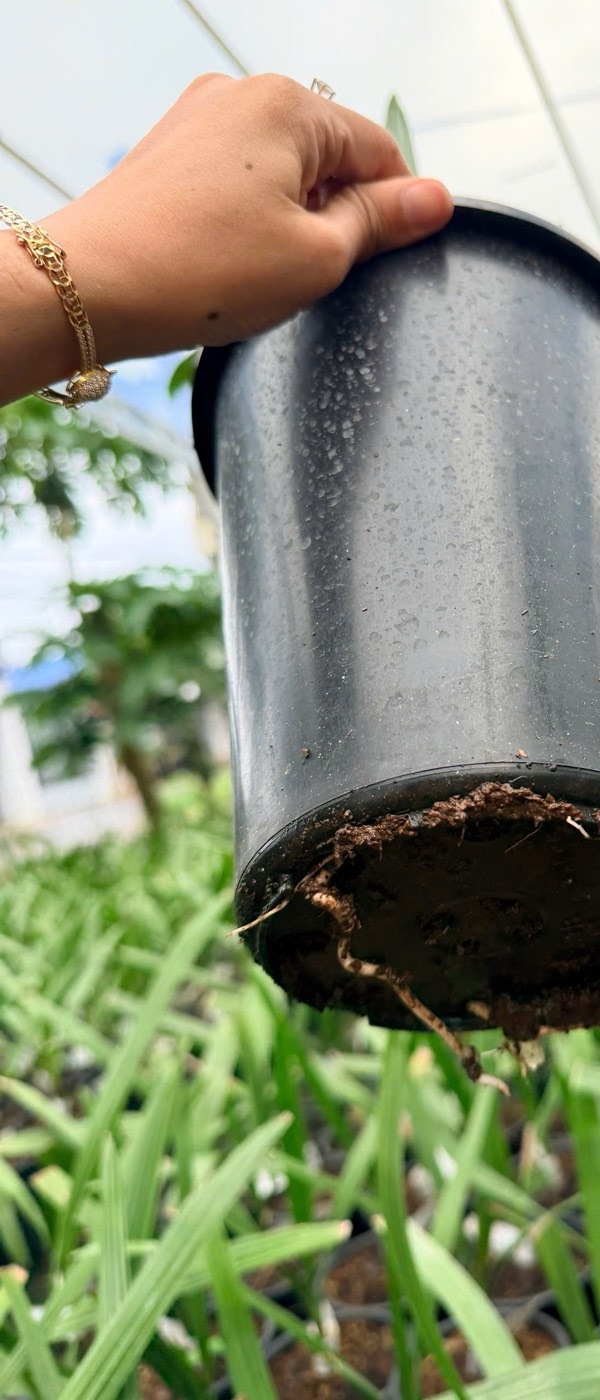
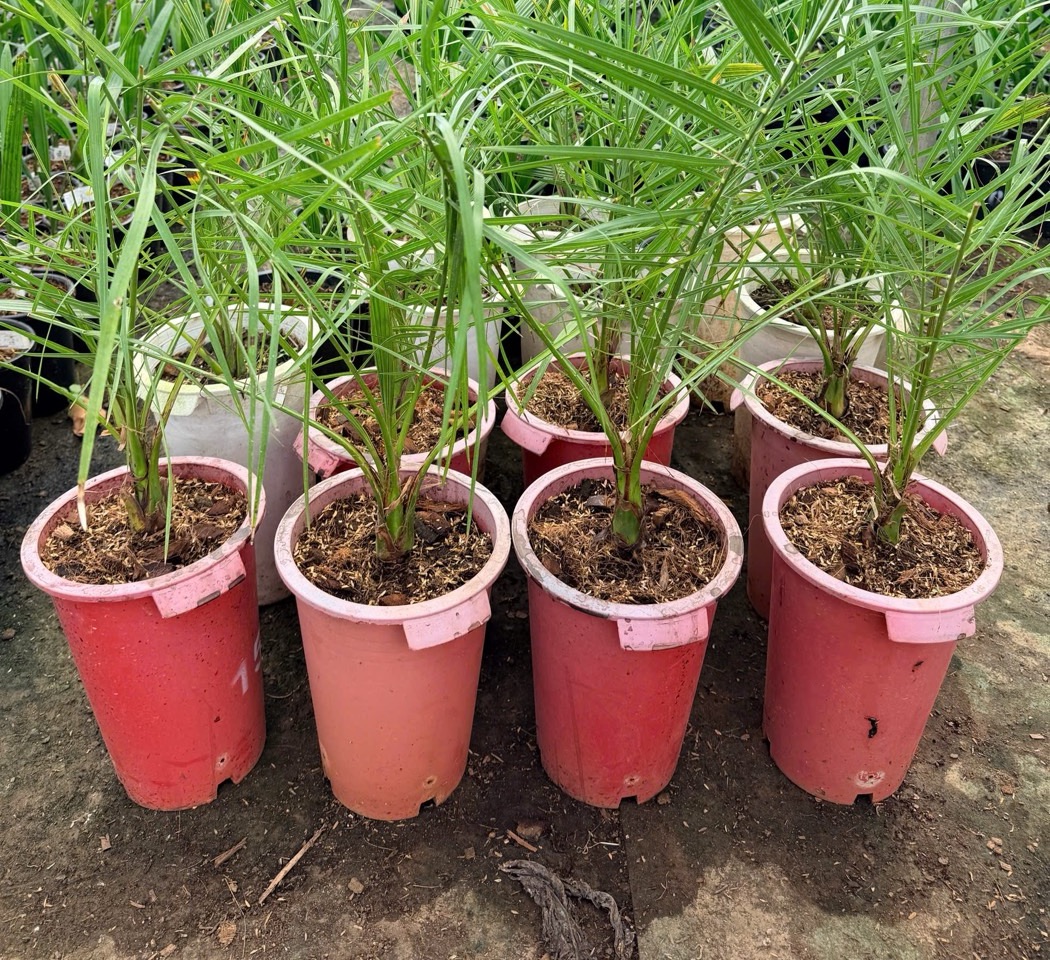
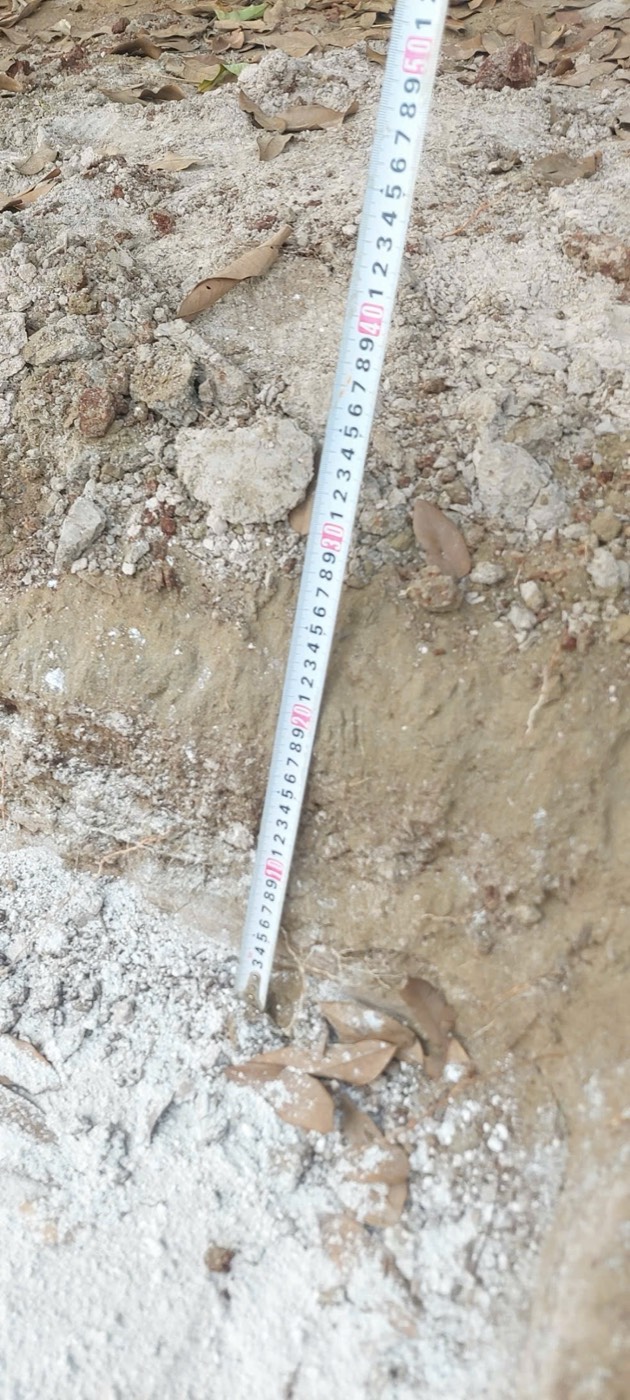
Each hole was measured with a ruler before a palm went in.
The young palms were brought into the field and set into the prepared holes, each ringed in black.
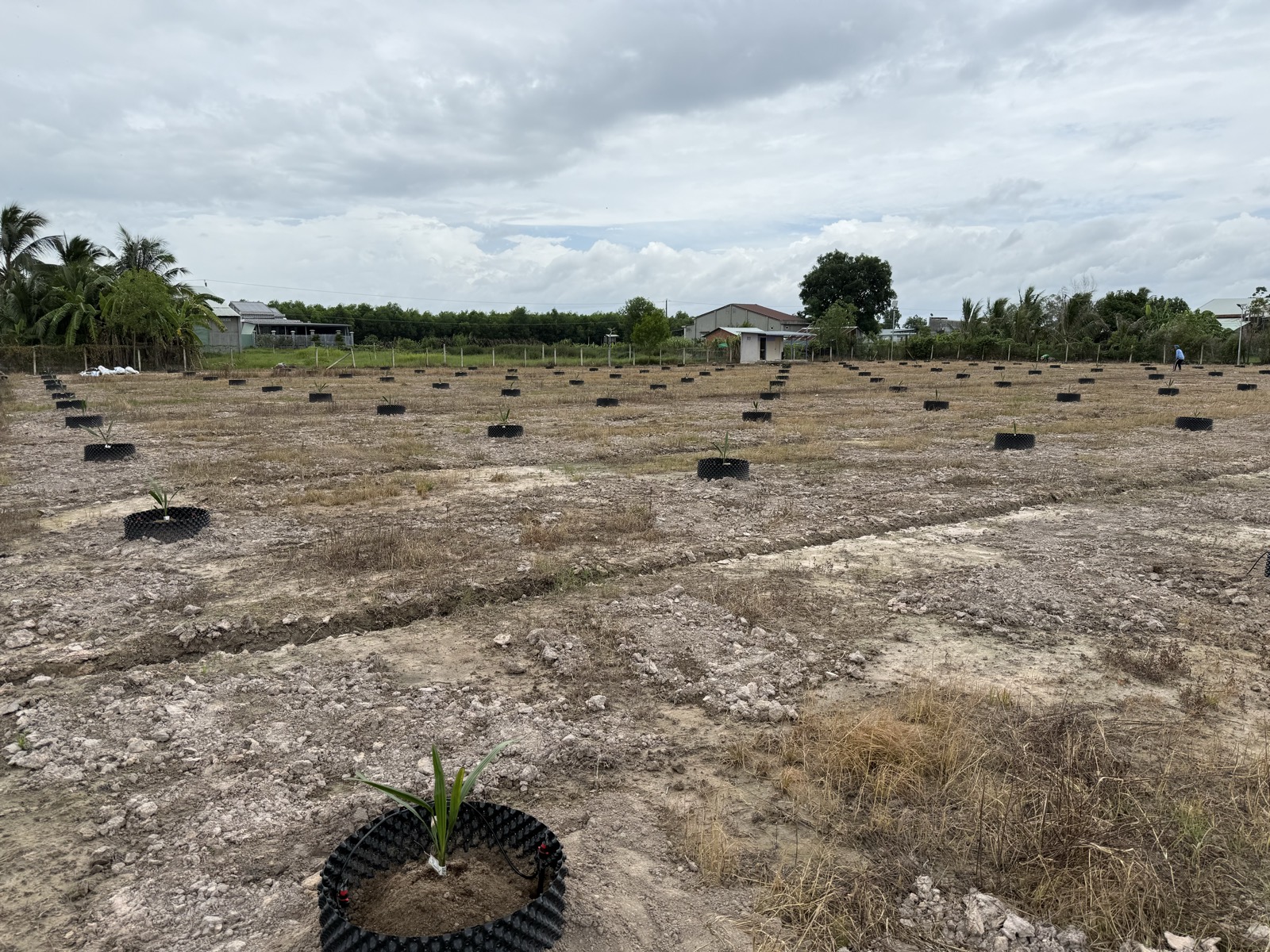
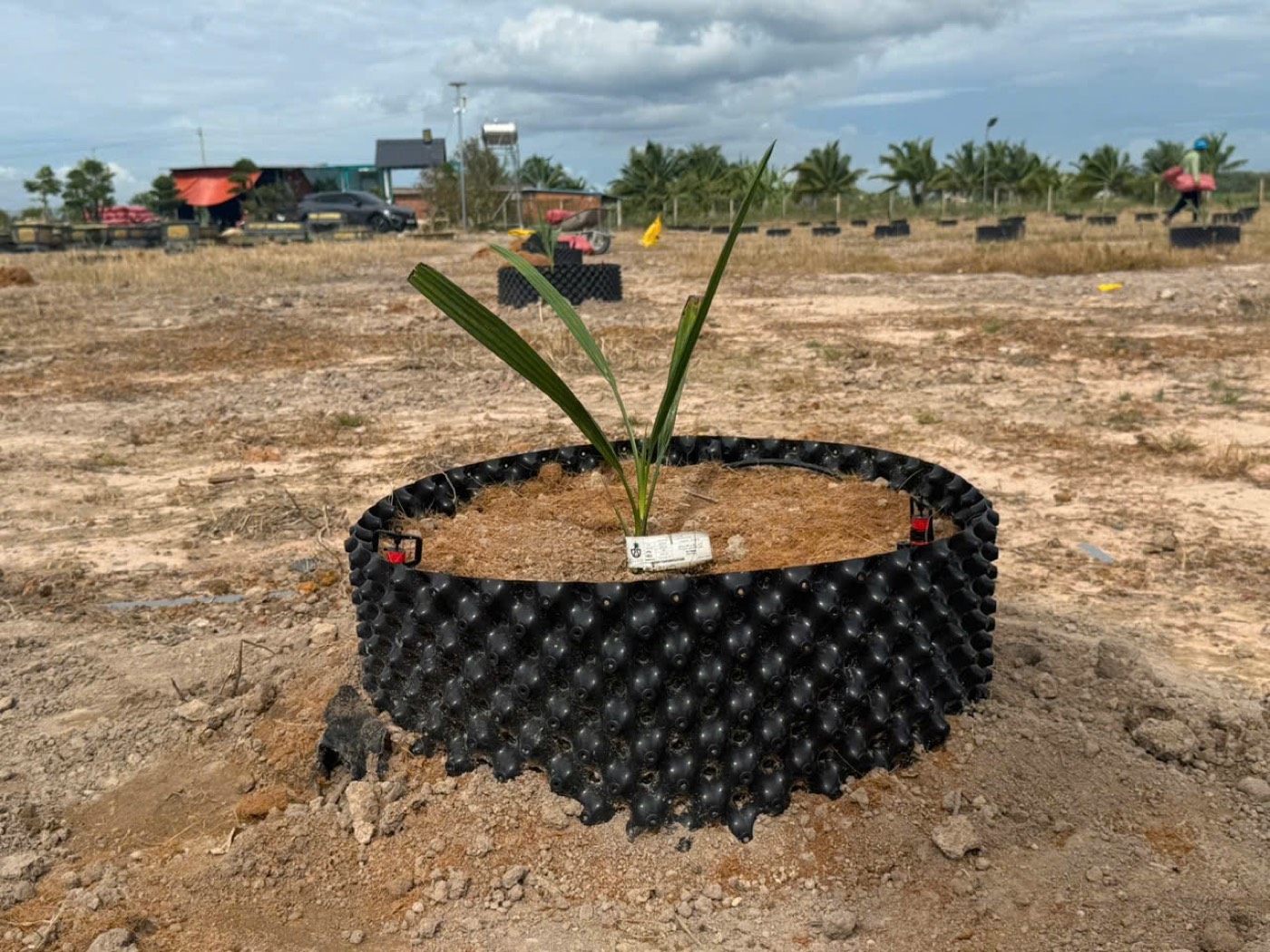
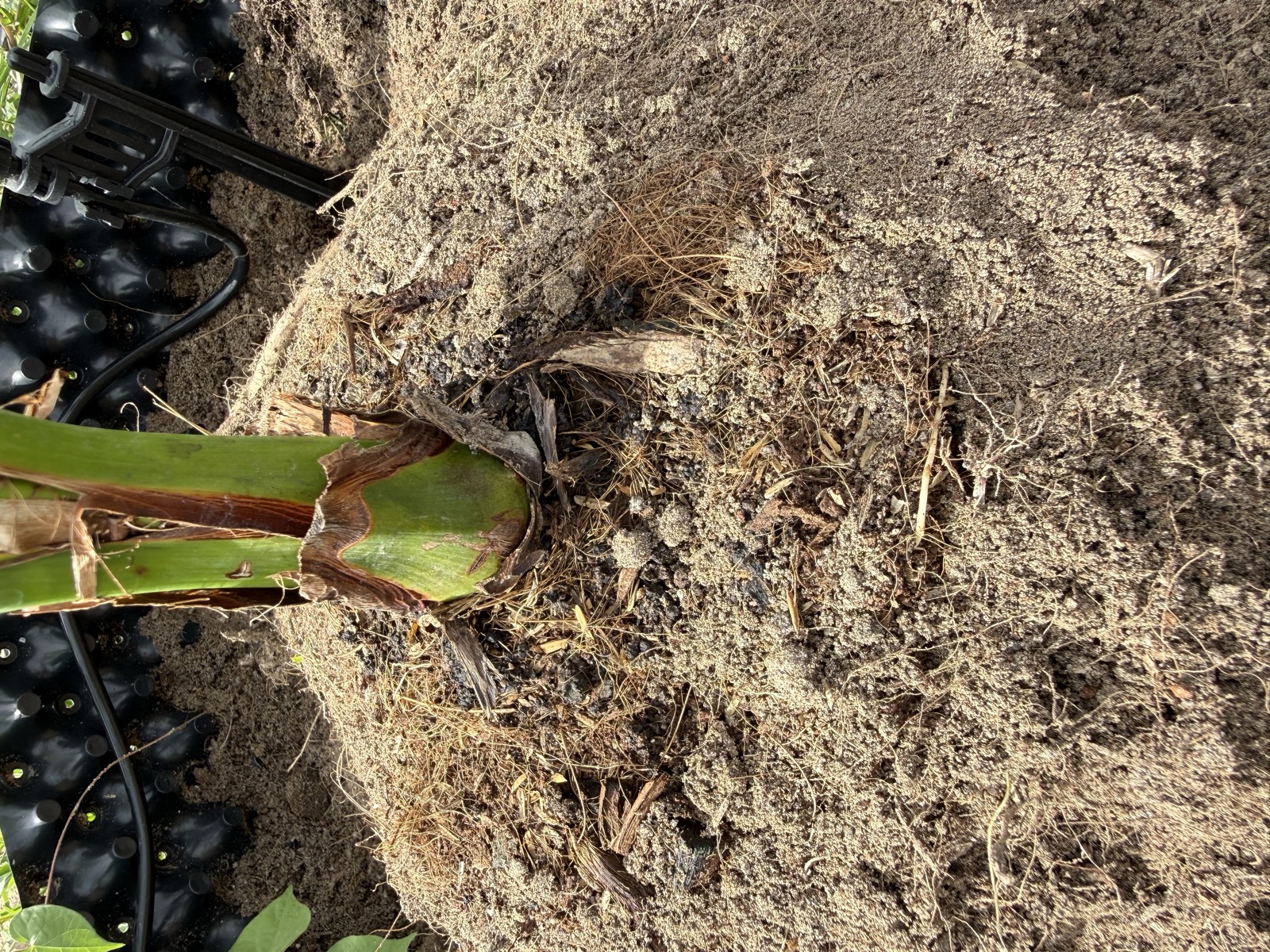
Soil was heaped into a high mound around each base so rainwater does not stand there.
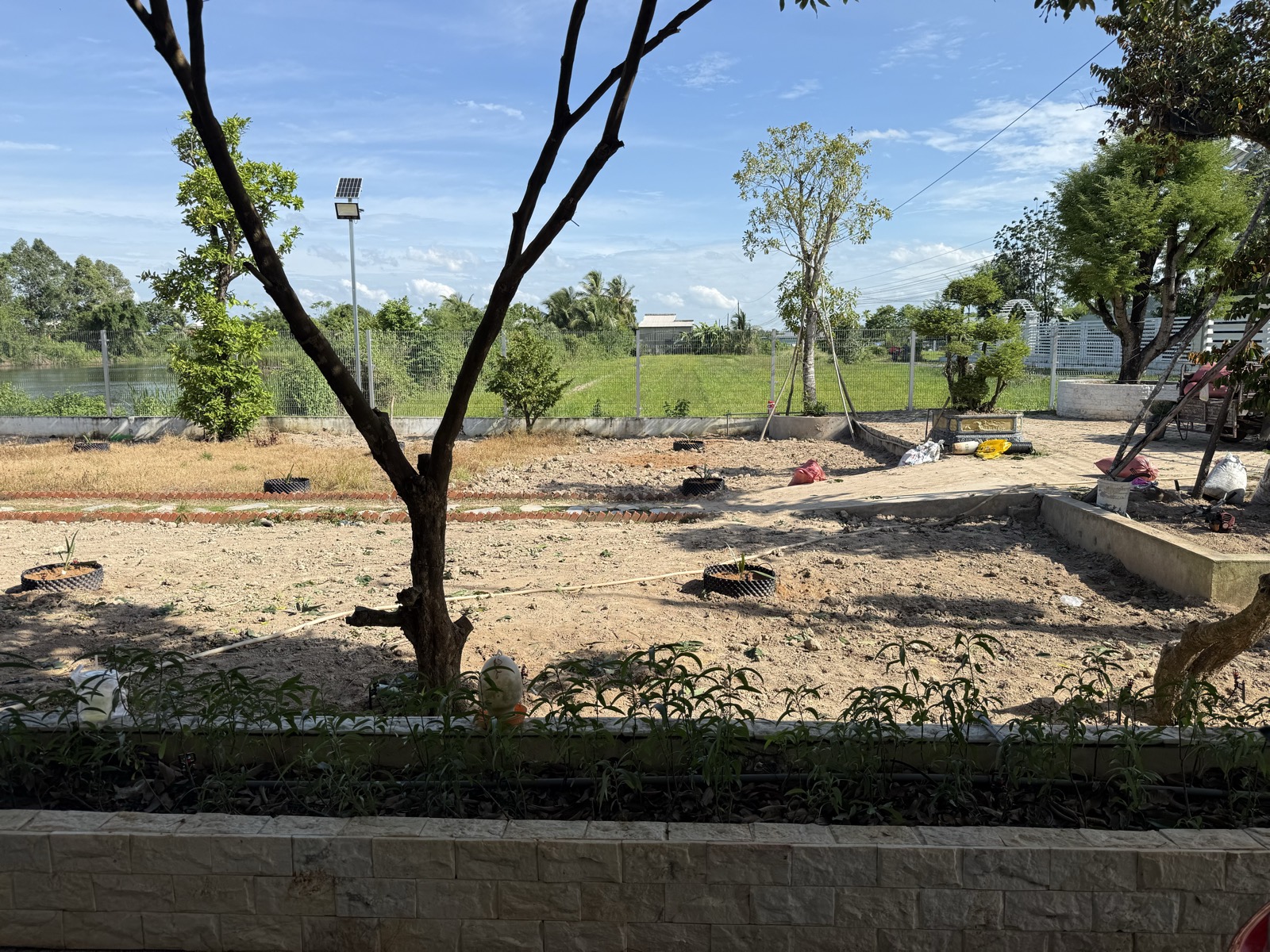
A corner of the garden a day after planting, young palms in black rings on freshly levelled soil.
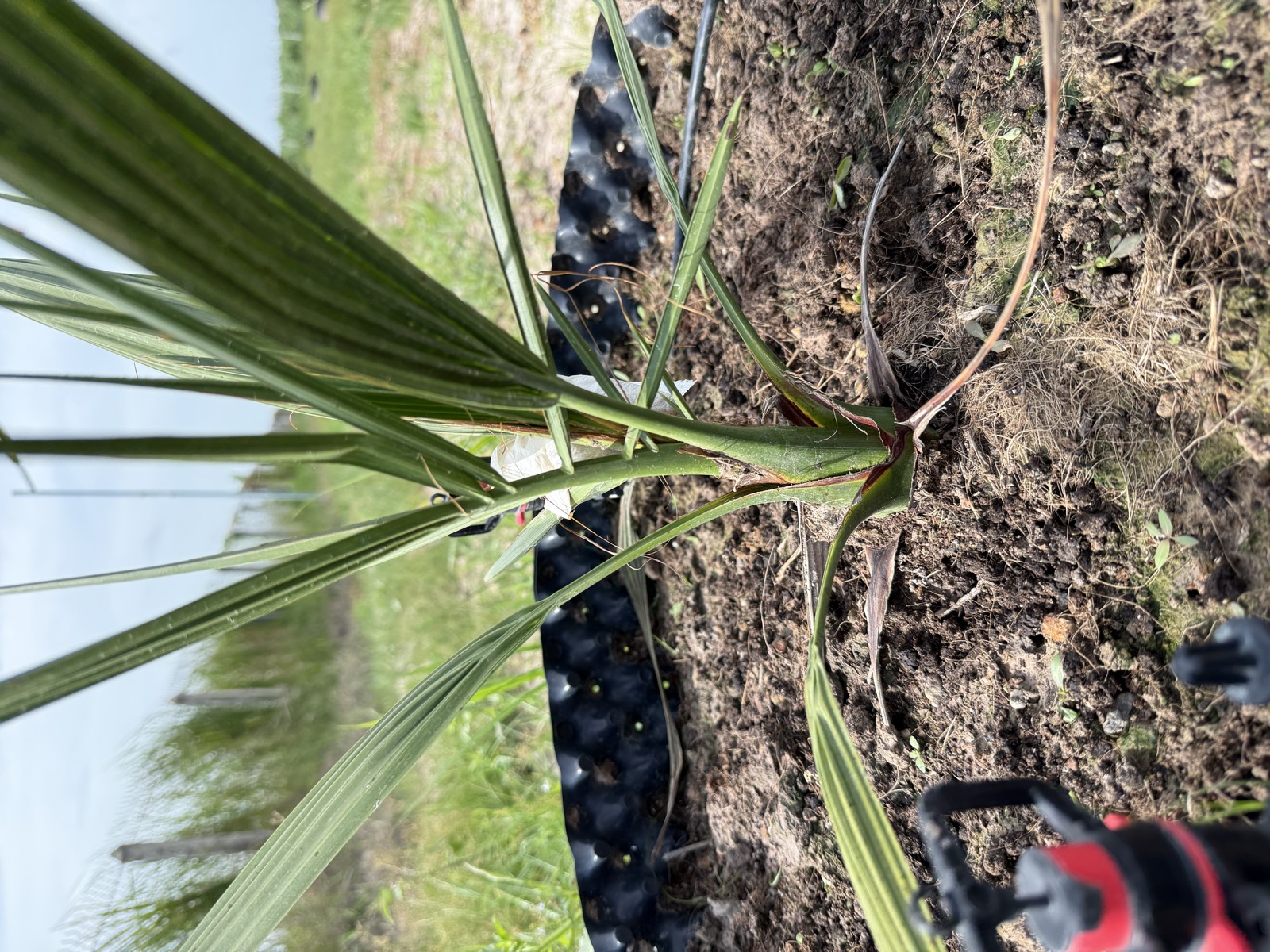
Seen from above: the palm sits in a black nursery ring with a drip emitter next to it. The ring helps against waterlogging in heavy rain.
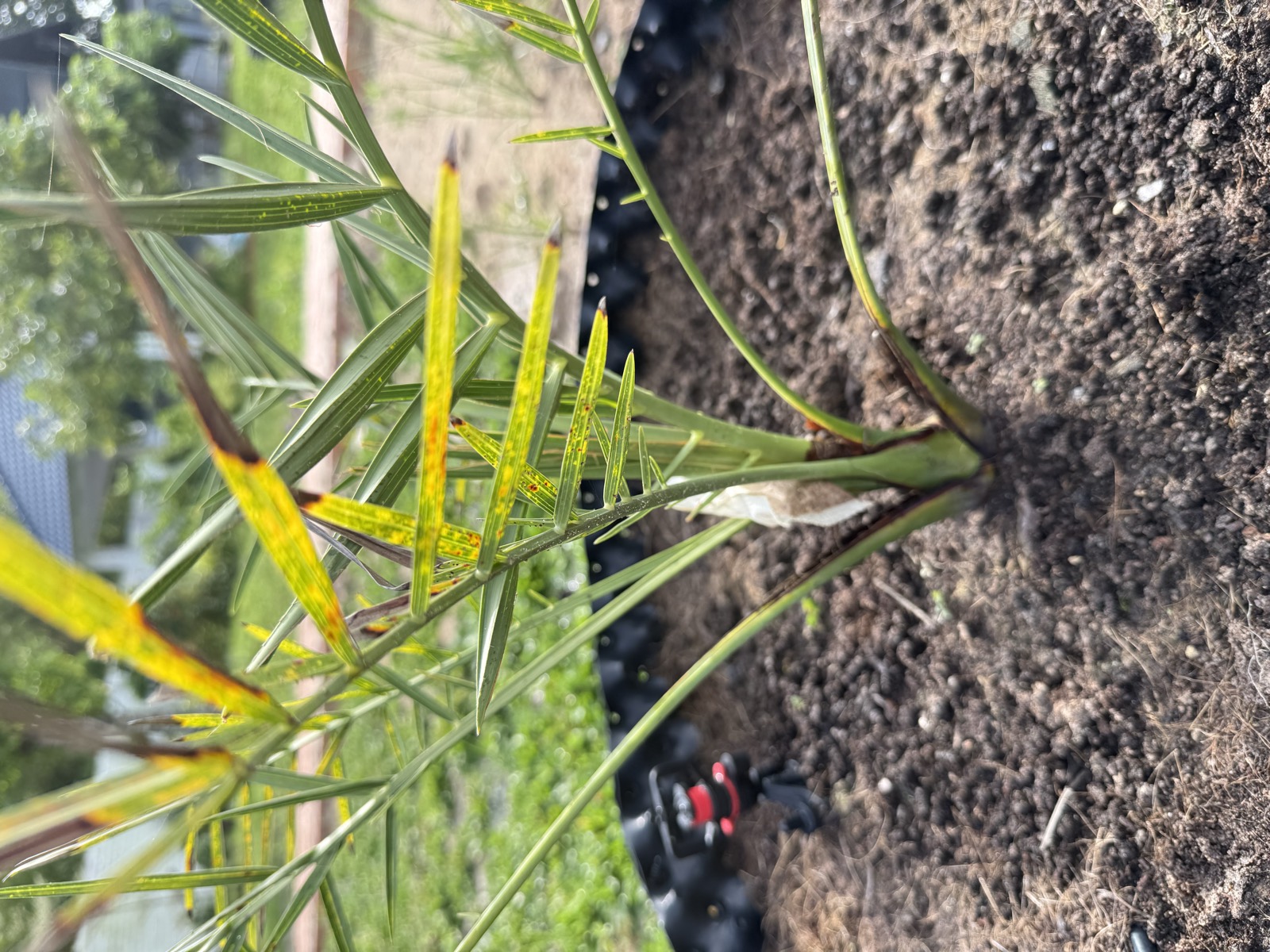
Some leaves show yellow marks. We are looking into the cause and will report back here.
Heavy rain means fast weeds. We cut them with a machine and use no chemical weed killer.
New photos and videos every week. Follow us on Facebook and TikTok to see them first.
Growth
The base of the trunk is the easiest place to see a palm growing. Each round picture below is a close-up of a palm base, cropped to a circle. Each month we photograph the base up close and measure its circumference, so that a few months on we can put the photos side by side.
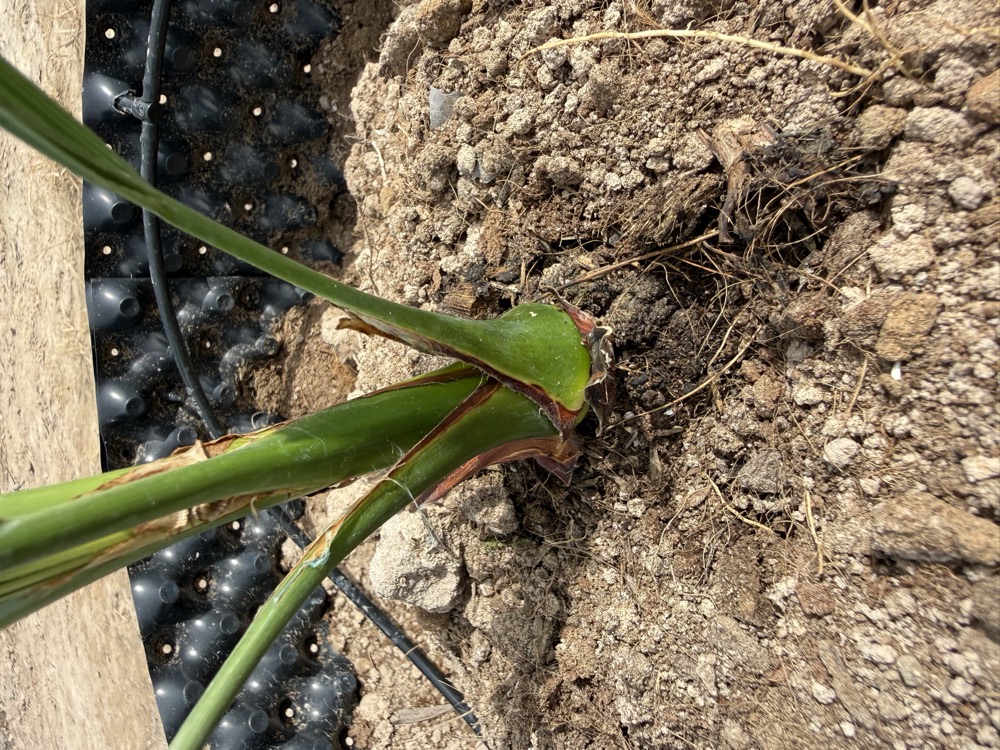
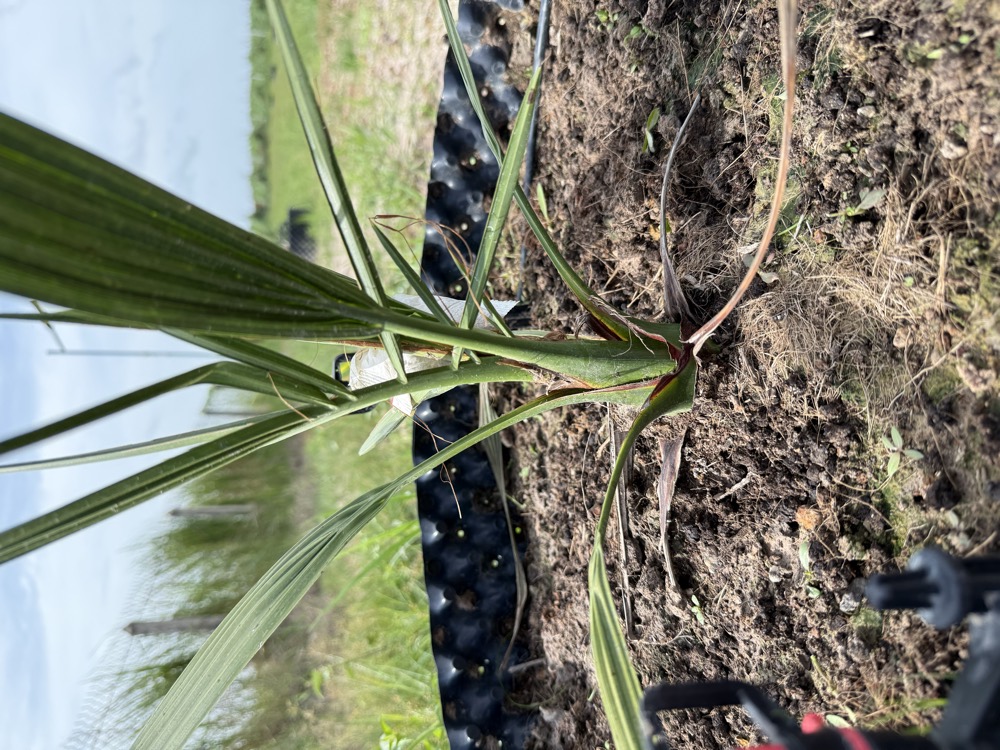
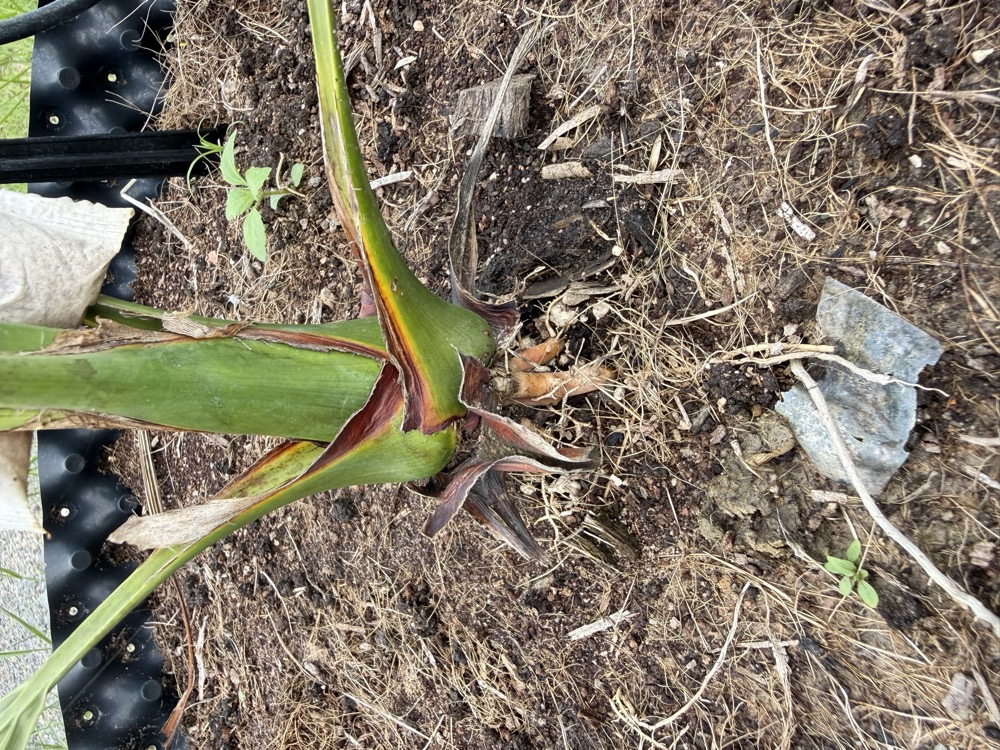
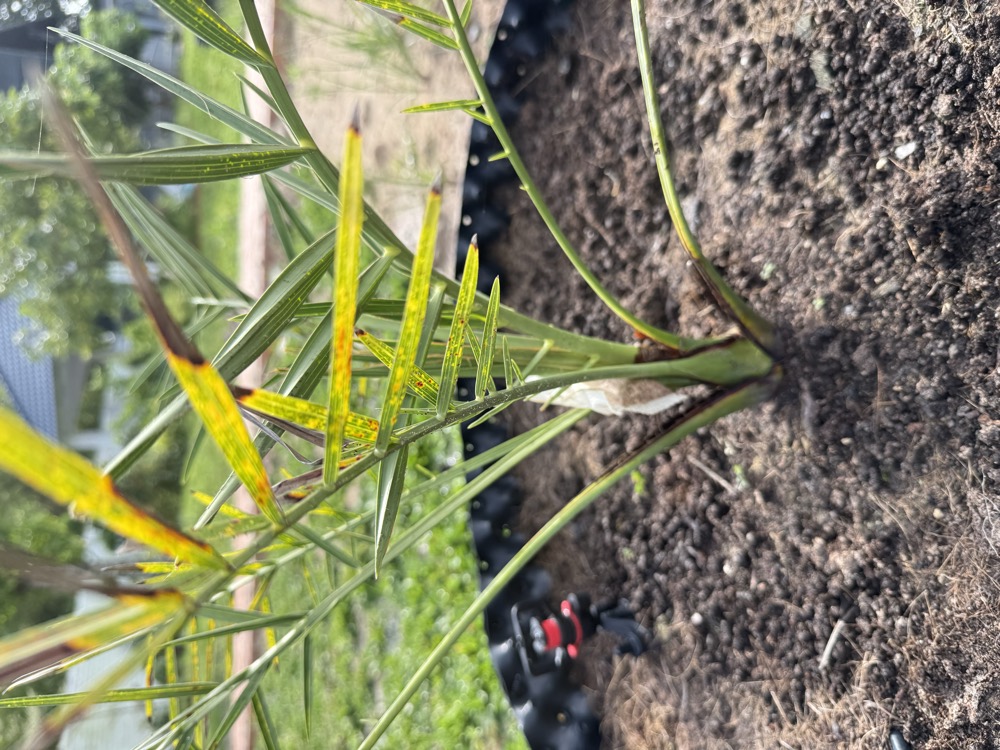
The photos above are not necessarily the same palm, so they cannot be compared yet. From November 2026 we will pick 5 palms, number them, photograph them from the same angle and measure the base circumference 10 cm above the ground every month. After three months the photos go side by side to show how much the base has thickened.
| Palm | Base circumference, Nov 2026 | Base circumference, Feb 2027 | Change |
|---|---|---|---|
| 1 | |||
| 2 | |||
| 3 | |||
| 4 | |||
| 5 |
Real measurements will be filled in here after each round.
Care
The rainy season in Phuoc Thanh is often heavy and floods easily. Date palms handle harsh weather, but young plants cannot stand waterlogging. The garden uses high mounds and nursery rings around each base. In a little over a year, when the palms are bigger, the rings come off.
Chemical weed killers affect the health of the people who work with them and the environment around the garden. We cut by machine: more work, more peace of mind.
Each palm has its own drip emitter so water reaches the base directly.
This is how this garden is run now, not general technical advice for every garden.
Timeline
These milestones are expected dates. The plants and the weather decide, and we will update if anything changes.
Levelling, marking spots, placing rings and drip lines.
Nearly 300 tissue-culture palms go into the ground.
Young palms get through the rains on high mounds, in nursery rings.
A little over a year on, when the palms are big enough.
Preparing paths and a place to welcome visitors.
Dates and a visitor opening are expected.
Visit
Not open yetOpening is expected from 2029. When there is an official date we will post it here and on Facebook. If you would like to come earlier, please message us first.